Turning an emotional heritage product into a trustworthy digital experience
House of Ishaani is an ethnic fashion brand specializing in handwoven Banarasi sarees, entering digital retail with no existing UX structure and no established online trust signals for a category where authenticity is everything.
View LiveSimilar-looking sarees, doubts about authenticity, endless browsing.
Occasion, weave and material filters with visible craft signals.
More confident browsing on a live Shopify store.
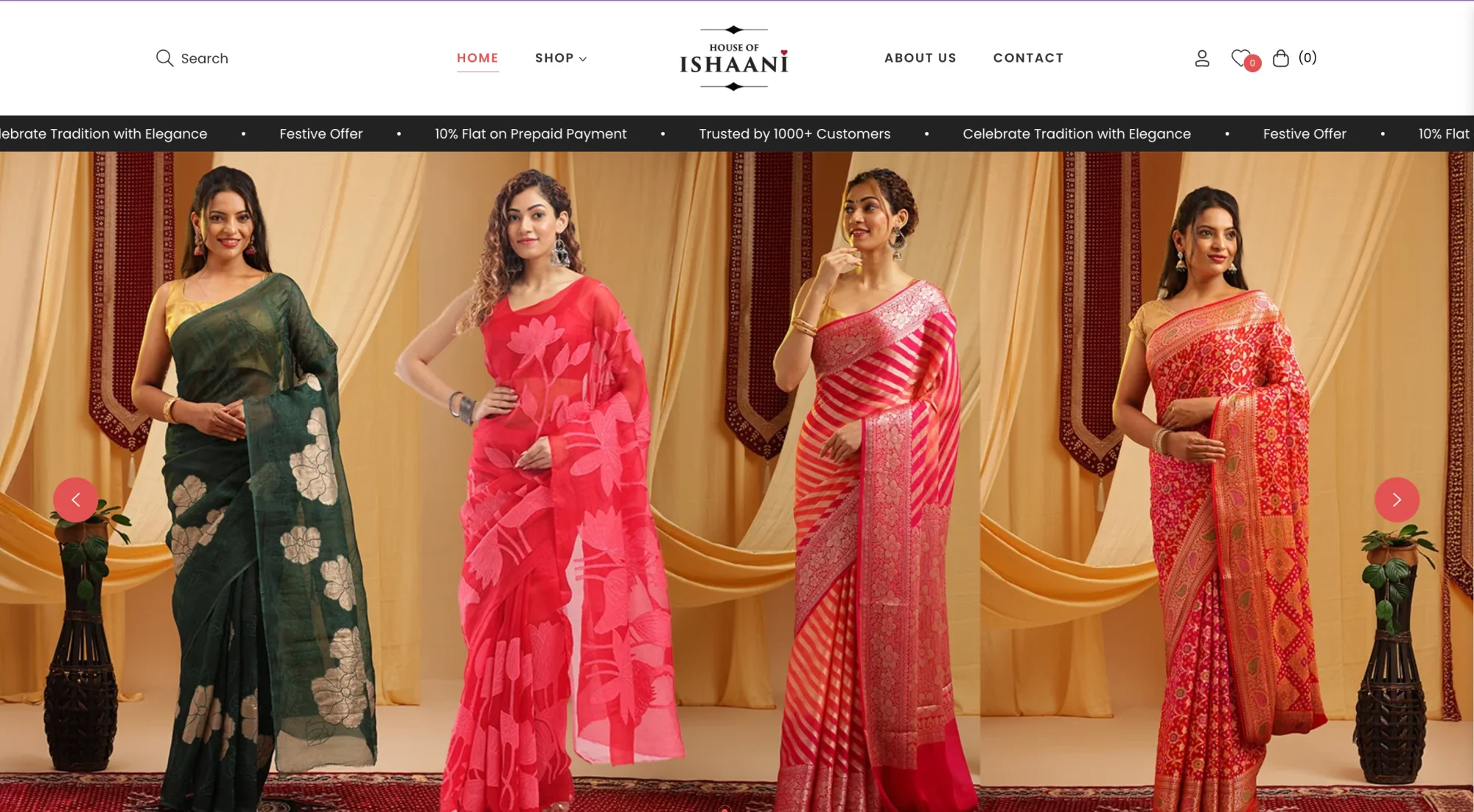
Shoppers were not unsure about taste. They were unsure what they were looking at.
Similar-looking sarees, doubts about authenticity and endless browsing.
Gift buyerstarts from an occasionStyle buyerstarts from a lookMaterial buyerstarts from a fabricBuilt from interviews, competitor analysis and session replays. Illustrated.
Browse, filter, trust and buy
The structure answers each shopper’s first question.
BeforeA flat category list. Sarees that were very different looked interchangeable.
Browse
Collections, not one flat list
- Shop
- Luxe Pastel Banarasi Organza
- Banarasi Blends
- Exclusive Silk Banarasi Organza
- Raw Mango Katan Banarasi
- Banarasi Handloom Khadi Georgette
Filter
Three ways in, side by side
- Occasion
- Where it will be worn
- Weave
- How it is made
- Material
- What it is made of
Trust and buy
Where verification already happens
- Product page
- Weaving technique story
- Craftsmanship badge
- Fabric details
- Wishlist and cart
- About Us
Built from houseofishaani.com and the case study. Each column is a stage of a shopper’s visit.
Two ways to a saree
Each path starts from the shopper’s own question.
Gift buyer: from an occasion to a saree
Starts from where it will be worn- StartPick the occasionTheir own questionNot a generic category
- BrowseOpen a collection
- VerifyRead the weave storyTrust in placeWhere people were already looking
- DecideWishlist or add to cart
Material buyer: from a fabric to a saree
Starts from the weave or material- StartPick the weave or material
- CompareFilter and compareLess fatigueStructure, not more photos
- VerifySee the craftsmanship badgeProof at the point of doubtBadge and technique together
- DecideAdd to cart
Built from the live store. The notes explain the design choice.
Three decisions that did the work
Each decision removed a doubt.
Three-dimensional taxonomy
Three kinds of shopper each asked a different first question.
Verify where people already look
Shoppers zoomed and reread to feel sure.
Structure over imagery
When sarees look alike, more pictures add fatigue.
What the solution looks like
Structure and craft stories show up where shoppers decide.
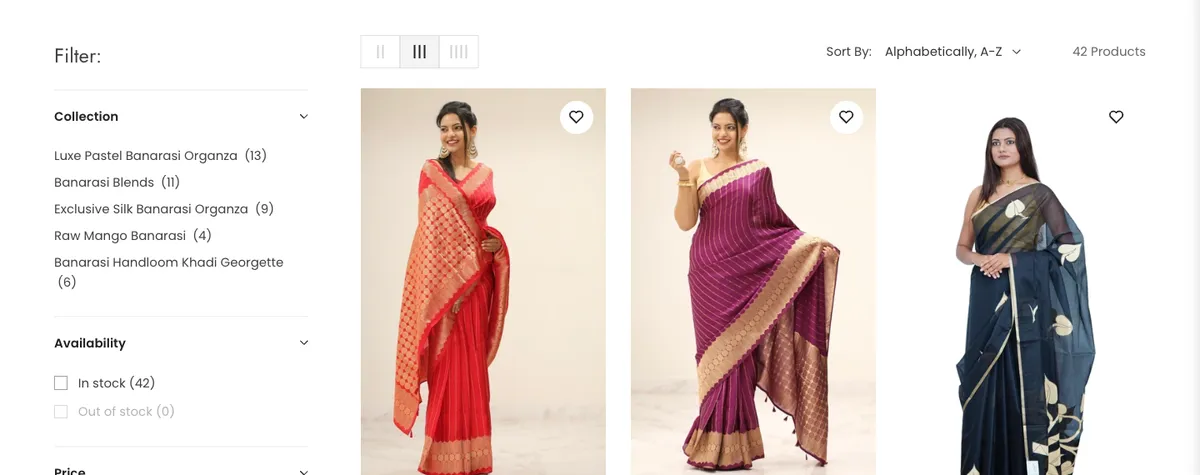
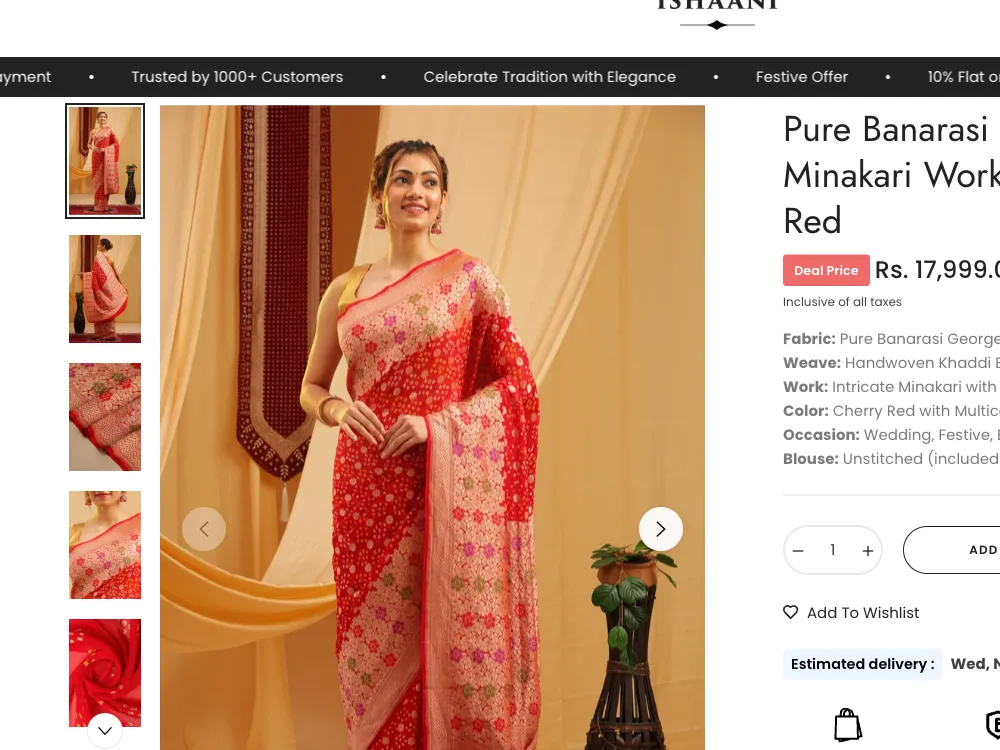
A catalogue shoppers can read
Fewer doubts between a visit and a purchase.
The path, before
- Lands on a flat category list
- Cannot tell sarees apart
- Zooms and rereads to feel sure
- Flips between sarees
- Tires of comparing
- Leaves without adding
The path, after
- Starts from occasion, weave or material
- Sees what makes each saree different
- Reads the weave story
- Sees the craftsmanship badge
- Compares with confidence
- Adds to cart
client-reported
client-reported
A structure built from three shopper types, and proof placed where the doubt was.
What I can and cannot claim. The engagement and fatigue directions are post-launch patterns the client reported to me, not numbers from a baseline I instrumented, so I keep them directional. What I can point to with more confidence is structural: a taxonomy built from three named shopper types, and authenticity signals placed where the session replays showed people already looking for reassurance.
What I would do next
The directions are the client’s. Measurement comes next.
Set a baseline for scroll depth and add-to-cart before the next change.
See which technique stories shoppers read before buying.
Place a craftsmanship cue next to the decision.
Component patterns, live on houseofishaani.com
Festive maroon and gold, with taxonomy chips and fabric story cards. Hover to try them.