Nook is a mobile app for Bengaluru. People find events, work seats and tables at cafés and brewpubs. Hosts get a room. Venues get busier hours. It has three views, one each for customers, hosts and venue owners. I designed and built every screen, alone.
Each side tries to fix it alone, and each fix creates a new problem.
The businessA cafe sells coffee. Its real asset is seats that sit empty at certain hours.The causeVenue, host and customer each solve it alone. Nothing connects them in one place.
Seats empty, tables blocked
The venue: empty seats, wrong fixesDiscounts cheapen the place. A laptop worker who stays all day on one coffee costs table turns.
Days lost per event
The host: a room is a negotiationBooking a room takes days of back and forth. Then the guest list lives in a chat.
No single place to look
The customer: nowhere to settle inRemote workers find cafes that limit laptops. Friends want a plan, not a search.
Venuewants fuller weekdaysHostwants a room and an audienceCustomerwants somewhere to settle inIllustrated. The venues in the prototype are real places and are not partners.
02·Context
Same café, two very different days
Mon
Tue
Wed
Thu
Fri
Sat
Sun
8 am
10 am
12 pm
2 pm
4 pm
6 pm
8 pm
QuietFull
Illustrative pattern. Not measured data.
Venues
Weekday seats sit empty. Discounts cheapen the place.
Hosts
Booking a room takes days. RSVPs end up in WhatsApp.
Customers
No obvious place that welcomes you for hours of work.
Venue
gives Seats and halls
gets Full weekdays, busy evenings
Nook
Customer
gives Pass, ticket, bill
gets A place to work, meet, eat
Nook
Host
gives An audience
gets A room and ticketing
Design bet
Sell access, not coupons. A seat, a ticket, a table.
03·Process
Start with the people who host
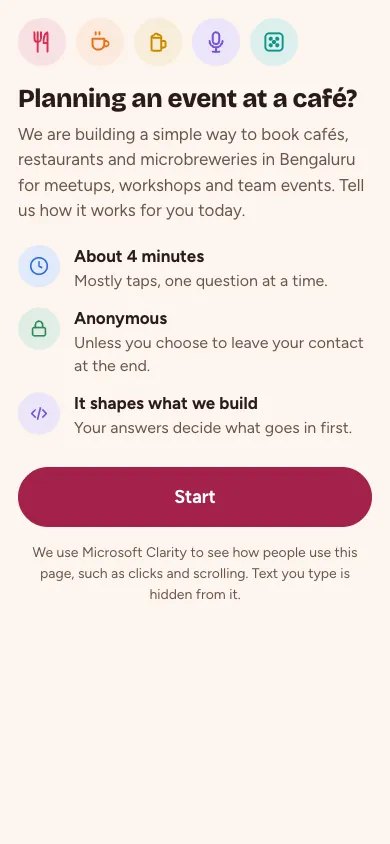
Hosts are the hardest side to win, so I began there with a short survey for people who run events in cafés and breweries.
SeatingMinimum spendFoodFeesVenue type
SurveyLive, answers charted
PrototypeOne pass, three roles
AuditEvery screen at 390 px
Small roundsFix, push, check
NextReal venues and hosts
04·Information architecture
Three roles, one map
Each role has its own colour and its own tab bar. A switch sheet moves you between them in one tap.
Customer
Home
Location search
Celebrate tiles
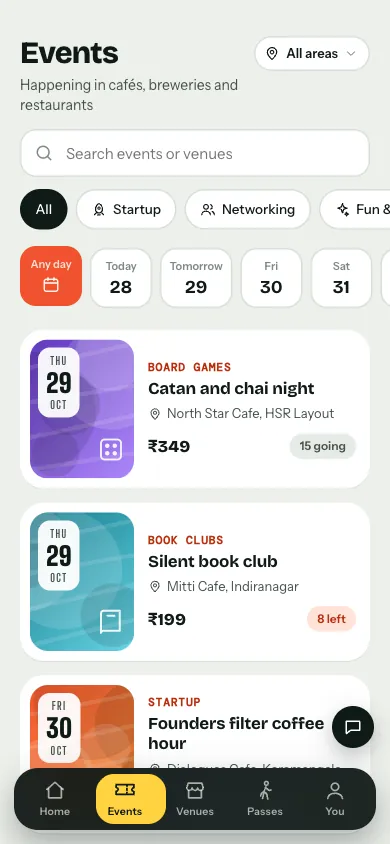
Events
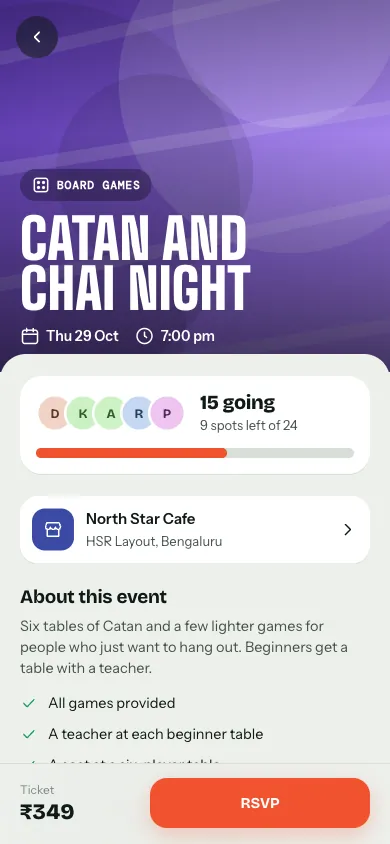
Event page
Ticket
Organizer page
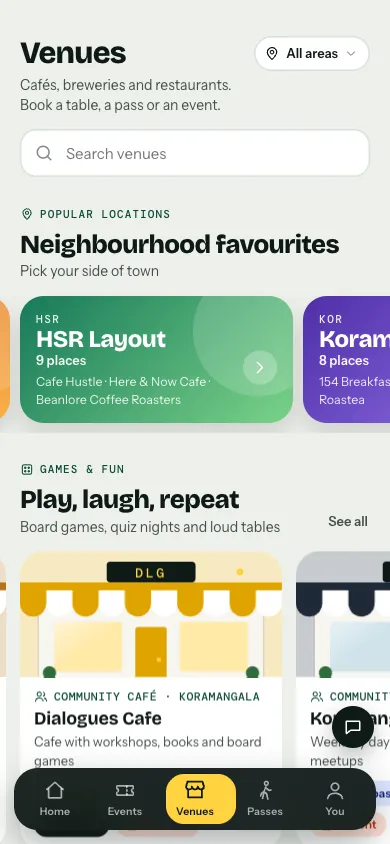
Venues
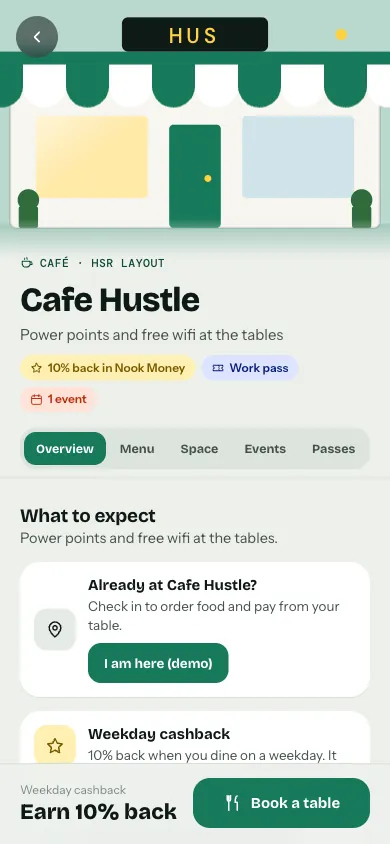
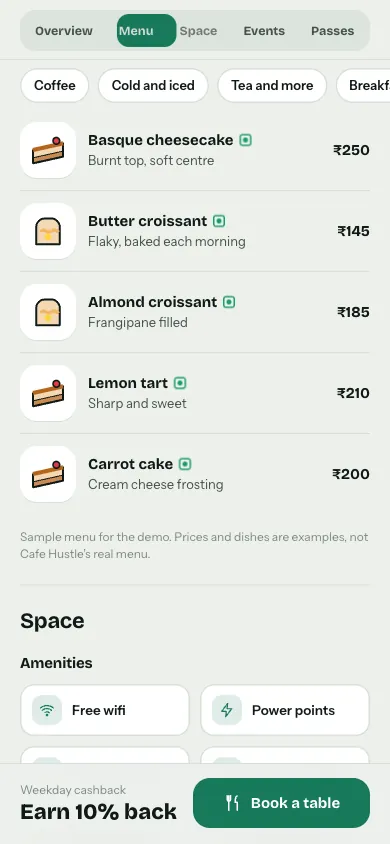
Venue page: Overview, Menu, Space, Events, Passes
Book a table
Order and pay
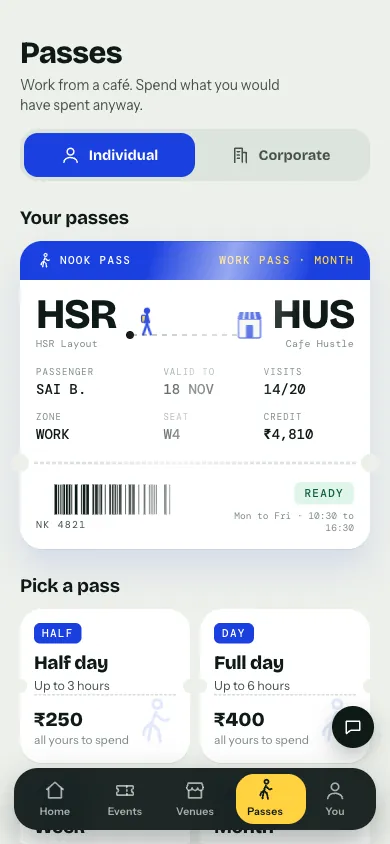
Passes
Half day, Full day, Week, Month
Buy: café, seat, pay
Team passes
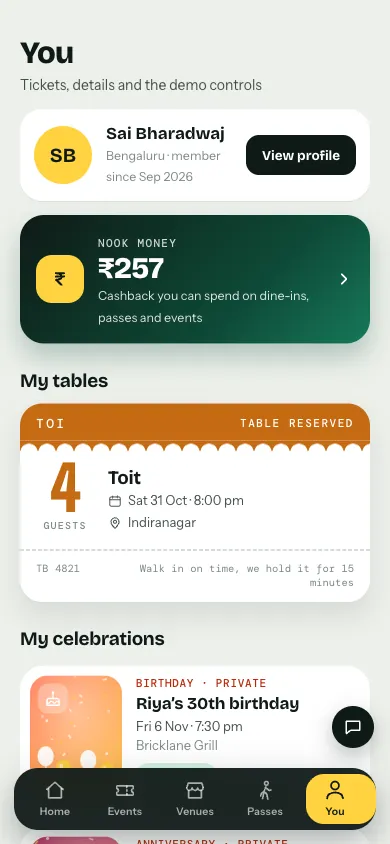
You
Profile and saved addresses
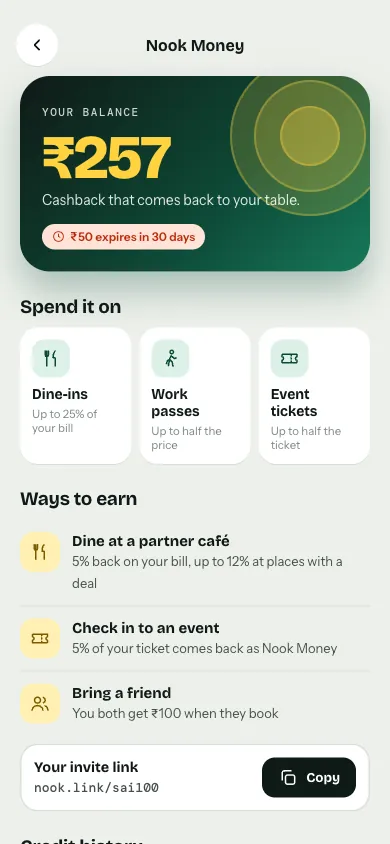
Nook Money
Orders and bookings
Celebrations
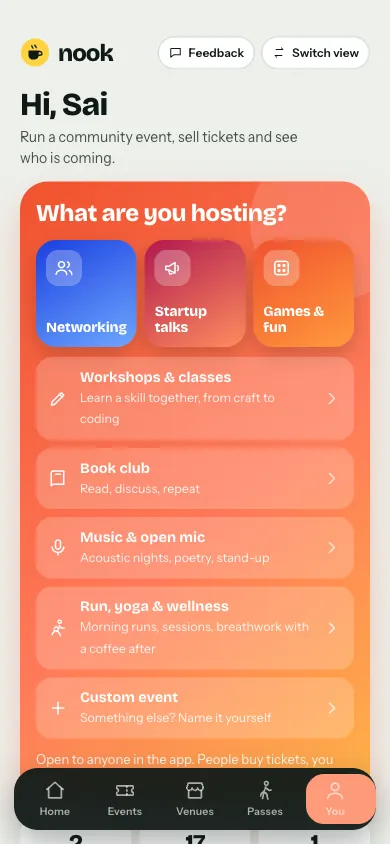
Host
Home
Next event
Quick actions
Plan
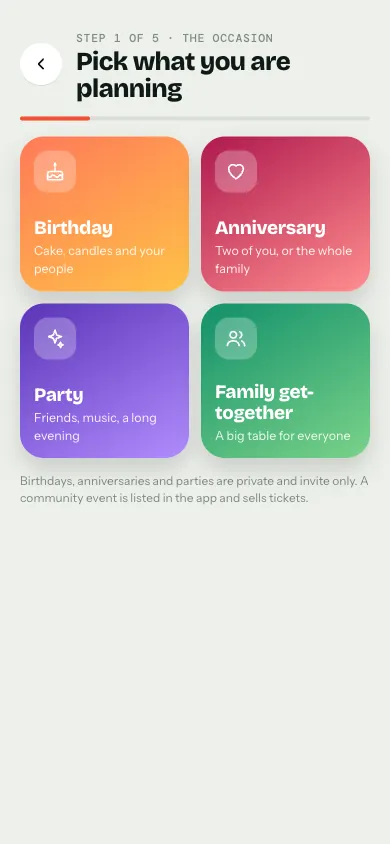
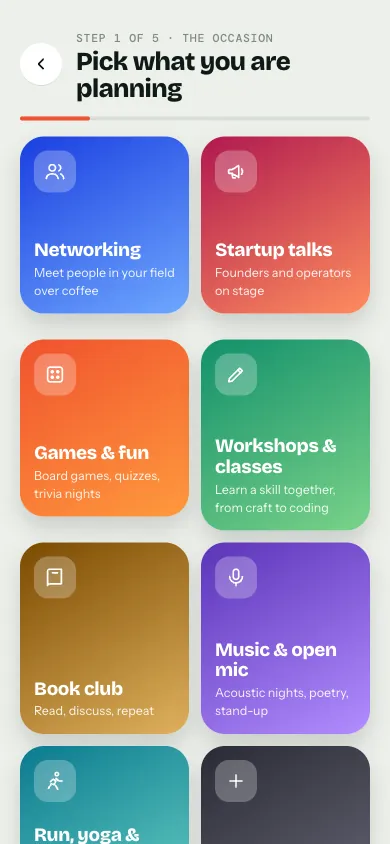
1 What kind
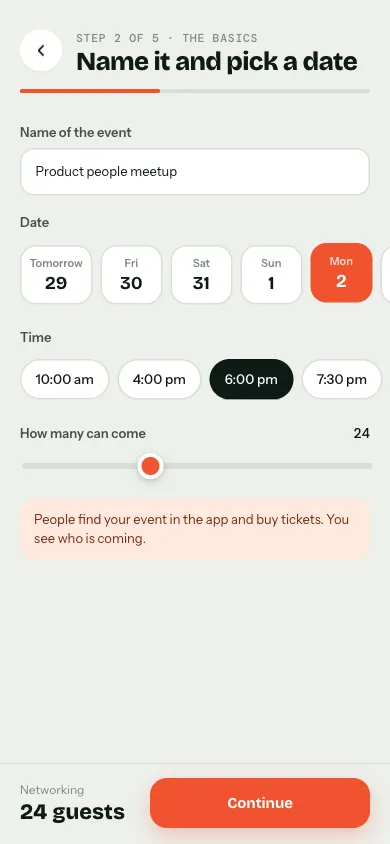
2 Name and date
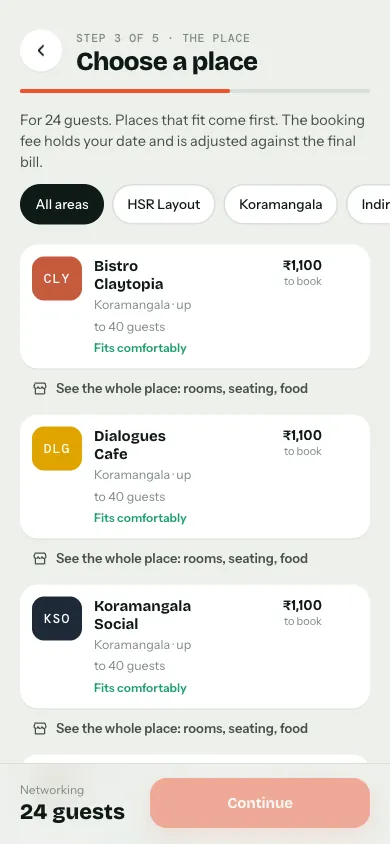
3 Place
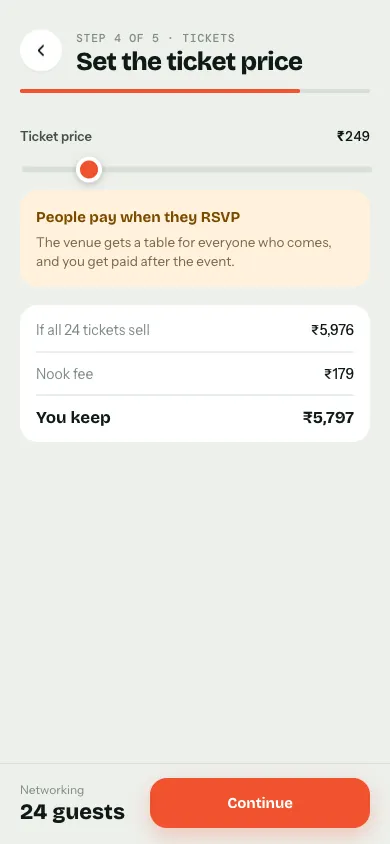
4 Tickets and food
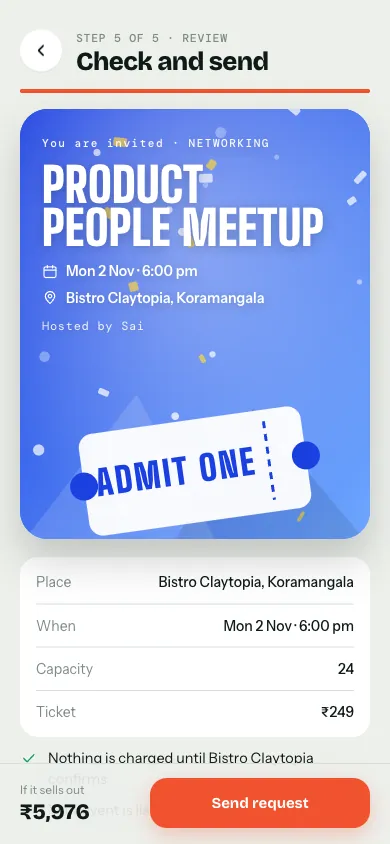
5 Check and send
Events
Event page
Guest list
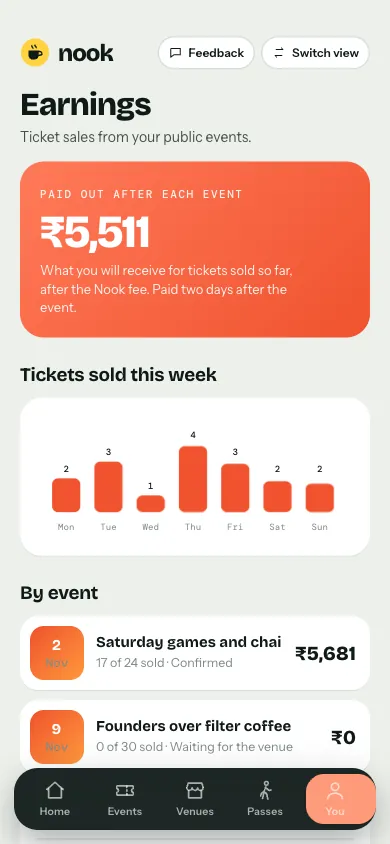
Earnings
Tickets this week
By event
Venue owner
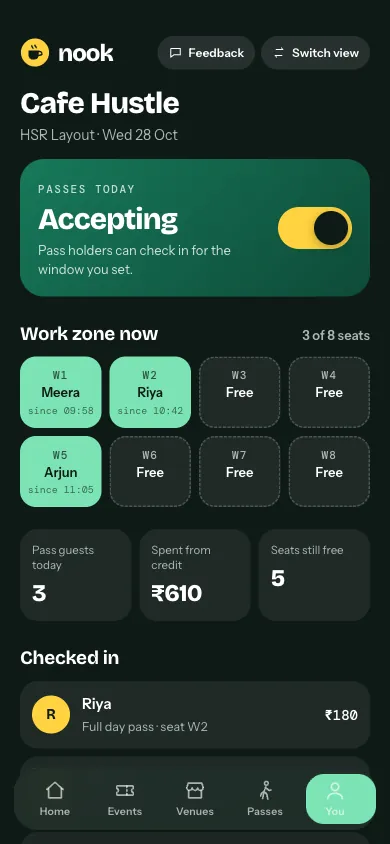
Today
Seat map
Check-ins and spend
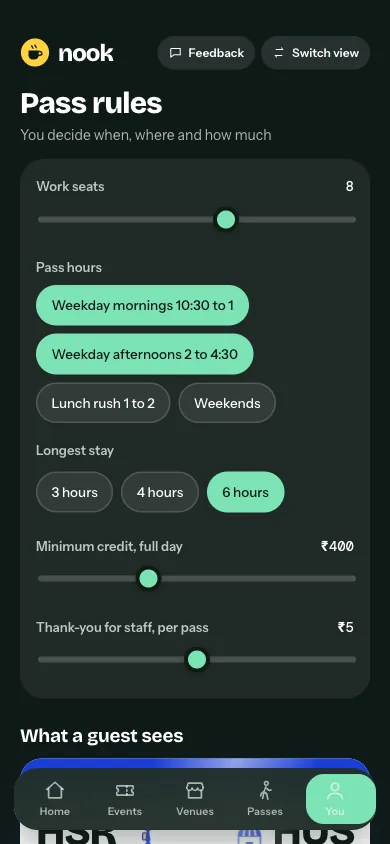
Pass rules
Seats and hours
Floor prices
Earnings simulator
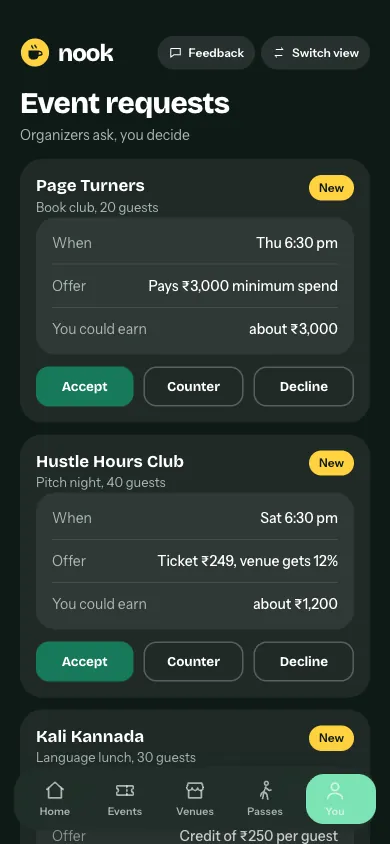
Requests
Accept
Counter
Decline
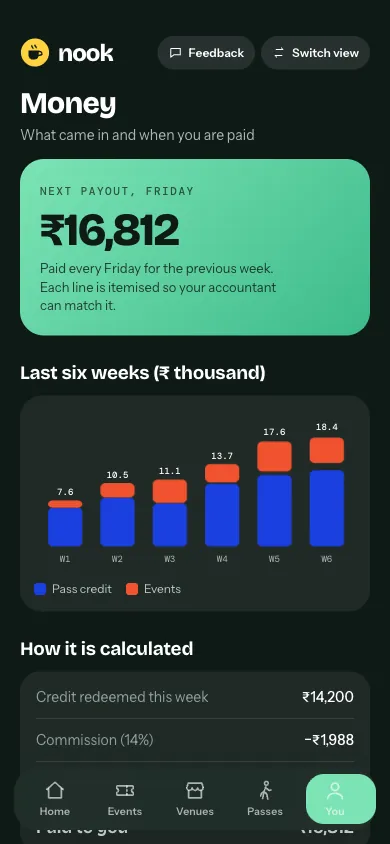
Money
Next payout
How it is calculated
05·Flows
Four flows, start to finish
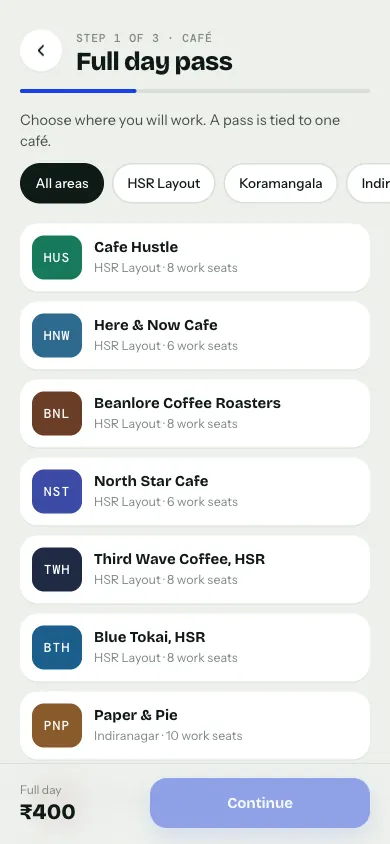
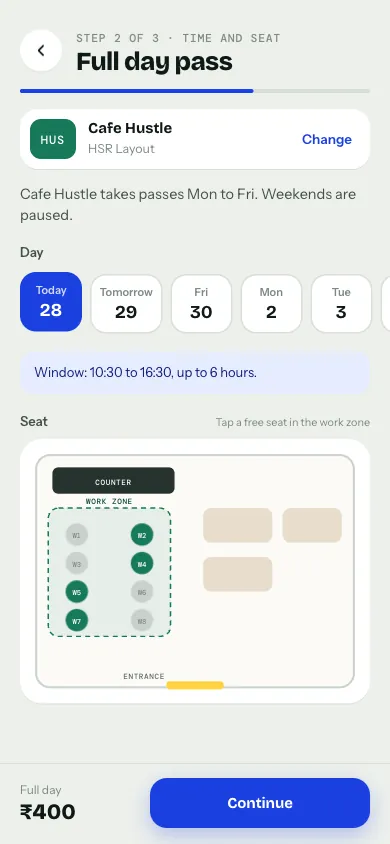
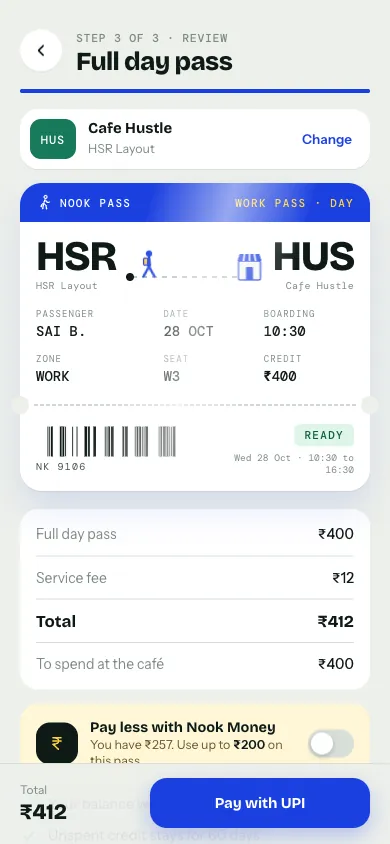
Buy a work pass
Customer · from the tab bar to a pass in the wallet
1Pick a pass
2Pick a café
3Day and seat
4Review and pay
5Pass is ready
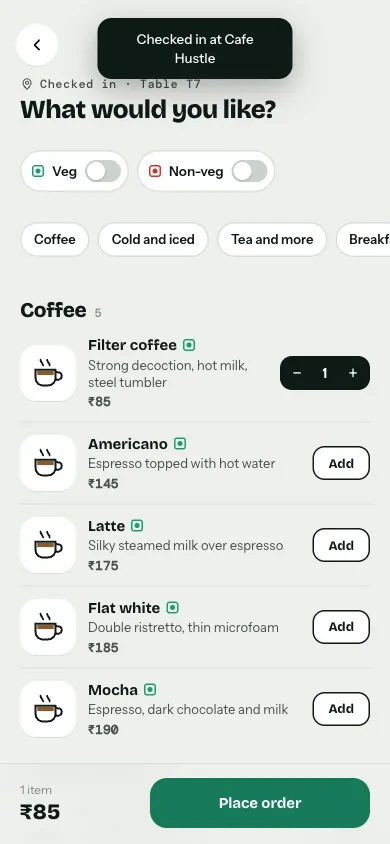
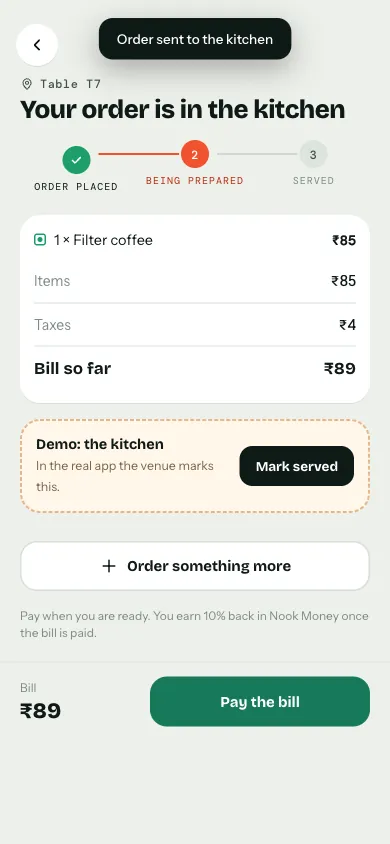
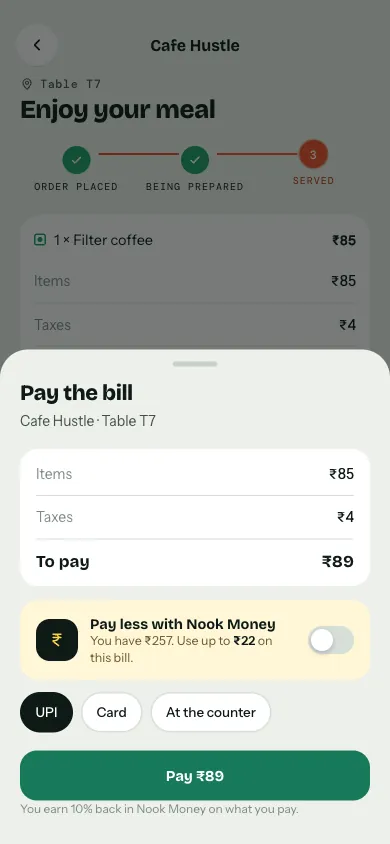
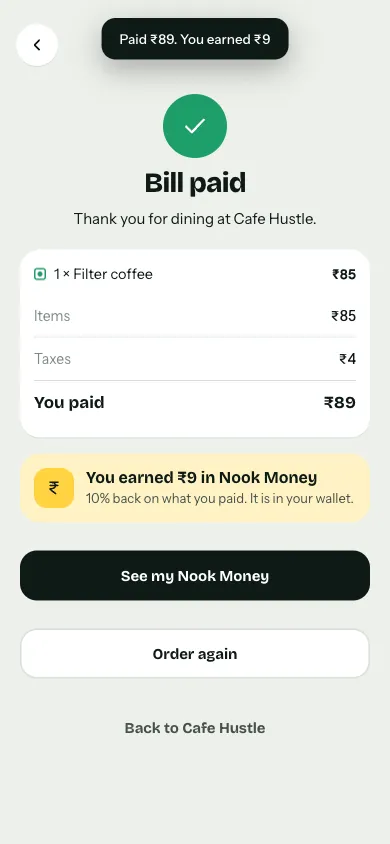
Eat at the venue
Customer · check in, order from the table, pay, get cashback
1Check in
2Order
3Kitchen
4Pay the bill
5Cashback
Host an event
Host · five steps from an idea to a shareable invite
1What kind
2Name and date
3Choose a place
4Set tickets
5Check and send
Run the café side
Venue owner · see the room, set the rules, answer requests, check money
1Today
2Pass rules
3Requests
4Money
06·Decisions
Five calls that shaped it
Passes
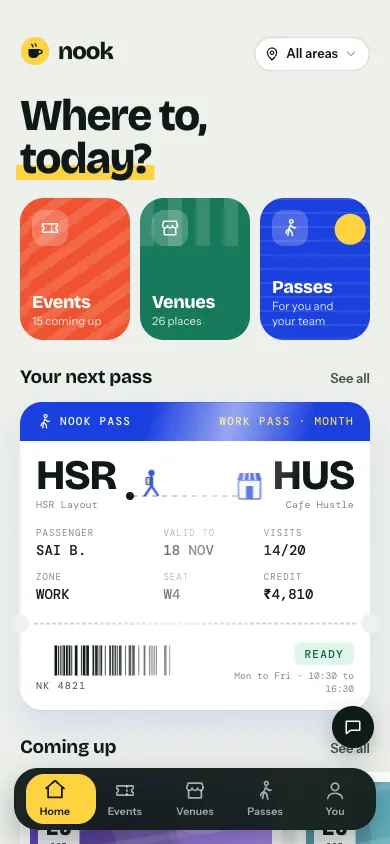
A pass should feel like a trip
Your area on the left, the café on the right, a route between.
Tap it to flip. The house rules live on the back.
Check in and the stub tears off.
Event tickets use a different shape, a gig stub, so the two never blur.
Venue page
One scroll, tabs that keep up
Before
Now
Before: each part sat behind its own tab, so you had to guess.
Now: five sections on one page. The tab bar follows you and highlights where you are.
Layout became Space. The old name did not say what was inside.
Money
Same money, two views
CustomerAmounts only
Venue ownerSees the commission
Trust
Say what is real
Real name, area, type of 26 places
~Example prices, menus, seats, deals
~Stock ambience photos, labelled
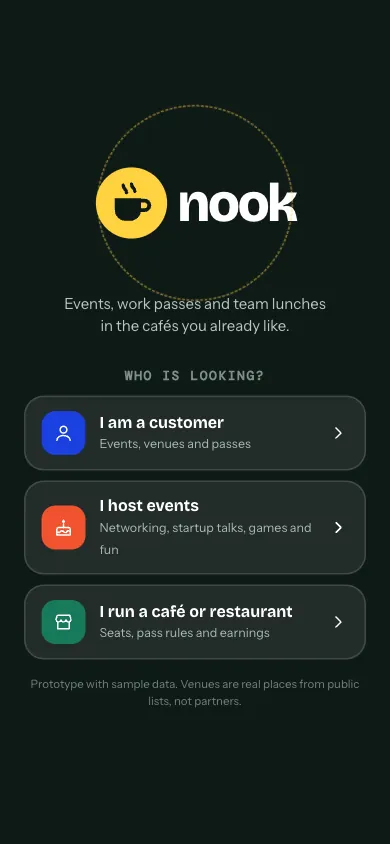
The venues are not partners, and the app says so on the first screen.