When a website looks finished,
but isn't production-ready
VibeCheck is a self-initiated audit tool. Not client work, not a portfolio exercise, just something I built on my own time because I kept catching the same problem across AI-assisted builds, including my own: a site can look completely done and still be quietly broken underneath. I scoped it, designed it, and built it, and it's now live in public beta for anyone to try.
View VibeCheckAI builds sites that look finished but break underneath.
One score and a short, ranked list of what blocks launch.
A working tool in public beta that I use on my own builds.
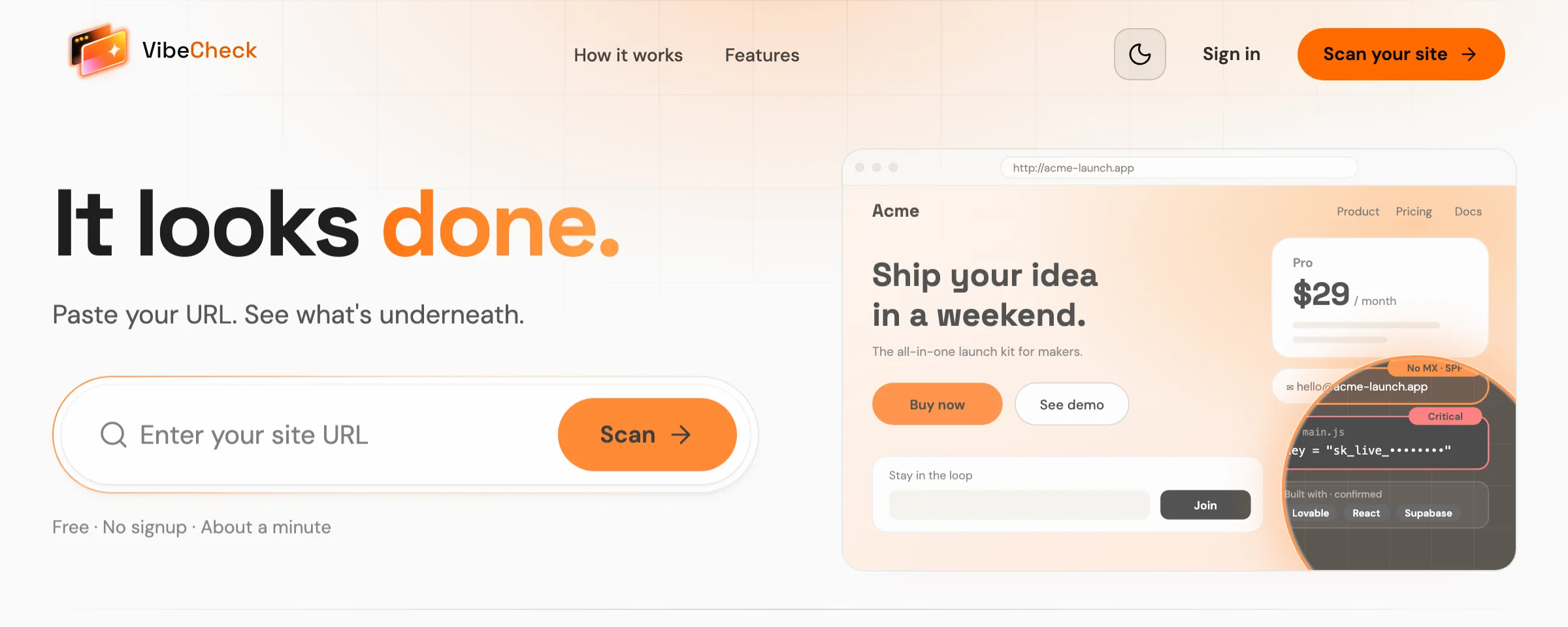
It looks finished, but it is not production-ready.
Looks done, fails silently, and cannot be found.
Builderships fast with AIVisitorhits what no one checkedBuilt from manual audits of my own and others’ AI-built sites. Illustrated.
Start, report, five categories
The structure puts the answer first and the detail second.
BeforeA raw, Lighthouse-style findings report. Nobody read past the first screen.
Start
One input
- Homepage
- Paste a URL
- Run an audit
Report
Score first, then the rest
- Score
- One number
- Critical list
- Ranked by what blocks launch
- Details view
- Everything else
Five categories
The repeat offenders
- SEO
- Performance
- Security
- Accessibility
- Integrations
Built from the case study and the live product. Each column is a stage of an audit.
Two flows from a URL to a fix
Each flow ends with something to act on.
Run an audit
A builder checking a site before launch- StartPaste a URL
- LoadA real browser opens the pageReal checksLoads and interacts, not static parsing
- CheckFive categories runFive, not fifteenThe repeat offenders only
- ScoreOne score appearsOne numberNot a wall of findings
- FixWork the critical listRankedWhat blocks launch first
Read the report
Deciding what to fix first- SeeThe score
- ScanThe short critical listShort on purposeThe first version’s full report made people close the tab
- DigOpen the details viewDetails on requestNot on the front screen
Built from the case study. The notes explain the design choice.
Three decisions that did the work
Each decision kept the result readable.
A score and a short critical list
A raw dump made the problem feel bigger.
Five categories, not fifteen
The same five failures repeated across every manual audit.
Real browser checks
Static parsing misses what a visitor’s browser hits.
From looks done to launch ready
Fewer surprises after launch.
The path, before
- A site looks finished
- The form fails silently
- Pages load slowly
- Search finds nothing useful
- Problems surface after launch
- A visitor hits them first
The path, after
- Pastes the URL
- A real browser tests it
- Gets one score
- Sees what blocks launch
- Fixes the critical issues
- Launches with fewer surprises
A score plus a short, ranked list. Everything else waits behind details.
What I can and cannot claim. VibeCheck only just entered public beta, so there's no meaningful adoption data to cite yet. What's above describes what's been built and the decisions behind it, not metrics from a mature product.
What I would do next
It is a beta. The next step is learning from other people’s sites.
Use beta usage to tighten the checks other people’s sites surface.
Check the ranking against what people actually fix first.
Add measurement once there is enough use to measure.